
Access to adequate environmental amenities is fundamental for the sustainability, resilience and quality of human life in cities. > this requires a better understanding of ecological patterns and social cultural processes in the places most people call home. … Weiterlesen
Laa Wohnbauforschung- Anpassen bestehender Siedlungsräume an den Klimawandel
Weitere Galerien
Kommentare deaktiviert
Introduction
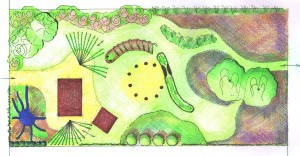
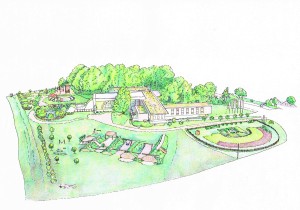 The blog Locus Vivendi presents the ongoing work and reflections of the Engineering Office for Landscape Architecture and Landscape Ecology Rottenbacher, which began in 1991 in Austria. Today, the office collaborates with an interdisciplinary team to co-work and co-create adapting living spaces through an exchange of perspectives and practices. Our goal is to contribute to sustainable projects with high social and ecological value.
Good Living in Good Places — understanding, designing, and caring for it together
locus vivendi connects science, practice, and lived experience. We work with municipalities, citizens, and professionals to create climate-resilient, vibrant, and fair living spaces—through nature-based solutions, Living Labs, and participatory processes, enabling:
- Understanding (knowledge exchange -shared analysing & modelling)
- Designing (building-managing & adapting)
- Experiencing (Living Labs & participation)
- Caring for (shared space & ecology)
- Research (insights & knowledge & methods)
Gute Orte brauchen: Beziehung, Pflege, Aushandlung, Zeit
- Everyday practice in sustainable living calls for engagement, responsibility, and stewardship toward the places we inhabit—within the natural processes on which we depend.
- Diversity of life includes both ecological and cultural diversity, as well as differing societal worldviews, meanings, and attachments to place.
Through processes of identification and emotional attachment to place, place-making initiatives can be supported—understanding Lebensraum as an expression of personal and shared community meanings and knowledge.

Christine Rottenbacher, Tim Cassidy, Katharina Ranjan, Stefanie Kotrba, and Dominic Urban work together with interdisciplinary teams. We strive to develop best-practice solutions for the various tasks at hand—integrating scientific insights with local knowledge—because every place and community has its own history, qualities, and challenges.
This blog was just started together – following modules will be developed step by step:
1st Module: Understanding Ecosystem Services
Holistic analyses & videos
Goal: An accessible entry point to understand and analyse complex interrelationships – ecosystem service assessments are used across scales, from place-based to landscape scale, aligned with the EU – CICES framework, linking cross-sectoral multifunctionality and potential synergies for local climate regulation, food security and biodiversity.
Contents:
- Short practical videos on place-based ecosystem services, cooling, water, soil, and biodiversity
- Explanations of CICES/CES criteria and characteristics in everyday language
- Sharing examples from municipalities and landscapes
→ Downloadable formats: Videos + short text summary
Maps & simple matrix representations
2nd Module: Organising and Adapting Lebensräume
Adapting gardens, open spaces, local areas, and landscapes
Goal: Sharing of adaptation and implementation knowledge for municipalities and private individuals
Contents: practical recommendations for:
- Climate-adapted gardens, streets and squares with trees as critical infrastructure
- Landscape processes
- school and residential environments in vulnerable areas… see project list
Connecting use, maintenance, and diverse ecosystem functions—combining simple nature-based solutions with everyday management.
3rd Module: Modelling Natural Processes
e.g. local cooling, water, and CO₂ — explained in an accessible way
Goal: Identifing vulnerable areas and objectivate local observations for identifying necessary and possible activities
Contents:
- Models for natural cooling (SPAC logic)
- Rainwater retention
- CO₂ storage
We identify together what can be influenced locally—connecting modelling with lived experience and knowledge.
Special feature: Not purely “calculating,” but jointly scoring ecosystem services based on currently available shared knowledge—so that adaptive decisions are grounded in practical orientation.
4th Module: Living Lab
Answering practical questions together
Goal: connecting science, practice, perspectives and everyday life
Contents: An interdisciplinary team made up of ecology, planning, social focus, arts, dance working on concrete questions from municipalities, citizen groups
Formats:
- Regular joint walks
- Workshops
- Dialogues, co-creation, humorous interventions together with citizens
- Performances
5th Module: Research & Reflection
Backgrounds, articles, methods
Goal: Make the scientific basis transparent and understandable
Contents: Key themes from research projects and/or articles:
- Social-ecological resilience relies on multi-criteria and multi-methods
- emotional correspondence: to arrive mutually at a shared listening and understanding, and to structure perceptions/experience using ÖSL
- Temporary and permanent place-making
- Short introductions + links to publications
Research is a process—not a finished body of knowledge.
6th Module: Tree & Green Space Management
Goal: Secure long-term quality—contribute to the debate on trees as critical infrastructure
Contents—strategies for:
- Enhancing existing tree stock with healthy soil-plant-water adaptations
- Care & development
Connecting: multifunctional use, ecology, and climate regulation
7th Module: Ecological Maintenance & Advisory
Learn together—care together
Goal: Support municipalities and maintaining community gardening communities
Contents:
- Joint walkthroughs/ every six months for identifying adaptive management issues
- Working with municipal maintenance/care teams
- Developing: care plans, adaptation strategies, care communities, etc.
Shared learning through observation and reflection
8th Module: Citizen Participation & Art
Make motivation visible
Goal: Strengthen the emotional and cultural dimension
Contents:
- Art, dance (https://www.metaffa.at/kunst-und-klima.html) and cultural projects in open space and landscapes
- Film, installations, and shared making/working
- Expressions of concern, hope, responsibility
Public spaces as spaces for resonance, sharing meanings
Veröffentlicht unter introduction, projects, takeaway
Kommentare deaktiviert